
You added a third crew this spring. Maybe a fourth. The phone keeps ringing, new accounts keep landing, and your service area now stretches from Alpharetta out toward Woodstock. On paper, that’s a win. In real life, your mornings feel like you’re putting out fires before the coffee even kicks in.
Here’s the thing nobody tells you when business takes off: growth doesn’t fix messy operations. It magnifies them. The small cracks you could patch when you ran two trucks turn into canyons when you’re running six. Crews show up at the wrong property. Photos never make it back to the office. A client in Milton calls, wondering why their hedges got skipped, and you find out the answer lives only in one foreman’s head.
This post walks through how to grow a landscaping business without the chaos that usually tags along. We’ll cover why systems have to come before scale, which processes to lock down first, and how the right tools and SOPs keep quality steady while you add accounts. By the end, you’ll have a clear picture of what to build so growth actually makes you more money instead of just more tired.
What’s the Right Way to Grow a Landscaping Business?
The right way to grow a landscaping business is to build repeatable systems before you add more crews, accounts, or service areas. That means documenting how jobs get scheduled, how crews handle each property, and how information flows between the field and the office. When the process lives in a system instead of your head, you can add volume without adding confusion.
Scaling a landscaping business the wrong way looks like this: you take on more work, then scramble to keep up, then hire fast, then watch quality slip because nobody trained the new folks properly. Scaling the right way flips that order. You tighten operations first, prove the systems work, then pour more volume into a machine that’s already running smoothly.
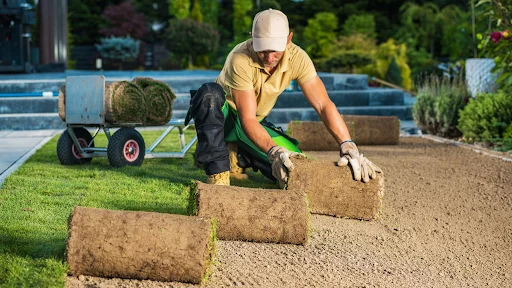
Think of it like laying sod. You don’t just toss it on bumpy dirt and hope. You grade the ground, you prep the soil, then you lay it. Skip the prep, and the whole lawn looks lumpy a month later. Same idea here.
Why Systems Beat Hustle Once You Hit a Certain Size
When you’re small, hustle covers a lot of gaps. You remember every client, every quirky gate code, every property that needs the mower set higher. You are the system.
That stops working around the third crew. Your brain can’t hold every detail for 80 accounts spread across Roswell and Alpharetta, and it sure can’t be in two places at 7 a.m. The business starts depending on you for decisions that should run themselves, and you become the bottleneck, choking your own growth.
Standardized landscaping operations solve this. Instead of every foreman doing things their own way, everyone follows the same playbook. That’s what keeps job quality consistent, whether you show up to the property or not. It’s also what lets you take a Saturday off without your phone buzzing every ten minutes.
The Core Systems to Build Before You Scale
You don’t need to document everything at once. Start with the areas where mistakes cost you clients and money. Here are the big ones.
Crew scheduling and routing
If your schedule lives on a whiteboard or in your phone, that’s a logistical problem waiting to happen. Map out routes that cut windshield time between properties. A crew bouncing from Milton to Woodstock and back wastes gas, daylight, and morale. Tight routing means more billable hours and fewer “where are we headed next?” texts.
Standard operating procedures for the field
Landscaping SOPs spell out exactly how a property gets serviced. In what order do the tasks happen? Which equipment to use? How the site should look when the crew rolls out. Write them down once, and every crew handles that property the same way, every visit. This is the heart of streamlining landscaping operations, and it’s the single biggest fix for inconsistent quality.
Office-to-field communication
Your office staff shouldn’t spend half the day chasing crews for job updates and photos. Set up one channel where crews log what got done, snap before-and-after pictures, and flag issues. Field service software for landscapers handles this well, but the tool only works if the process behind it is clear.
Job costing and invoicing
When every crew tracks hours and materials differently, you lose sight of which jobs actually make money. Standardize how job costing for landscapers gets recorded so you can see real margins per property, not guesses.
Onboarding and training
New crew members take forever to ramp up when nothing’s written down. Role-specific workflows and documented SOPs cut training time dramatically. A new hire can read the procedure for a property instead of shadowing your best foreman for three weeks.
Make Technology Match How You Actually Work
Plenty of landscaping companies buy a slick field service management app, then watch the crews ignore it. The software ends up being expensive guilt sitting on everyone’s phone.
The fix isn’t a better app. It’s getting your processes nailed down first, then choosing tools that fit the way your team already moves. Workflow standardization comes before software, not after. If your crews don’t have a clear process for logging a completed job, no CRM is going to magically create one.
When the tech matches real operations, adoption sticks. Crews use it because it makes their day easier, not because you’re nagging them. That’s when service business automation starts paying off, with fewer skipped properties, faster invoicing, and reports that actually reflect what happened in the field.
This is the kind of operational untangling Groome Consulting Group helps growing service businesses work through. Sometimes an owner just needs a second set of eyes to spot which broken process is quietly costing them the most.
How to Protect Margins While You Add Accounts
Growth that doesn’t grow profit is a trap a lot of landscaping owners fall into. You’re busier than ever, the trucks are full, and somehow the bank account doesn’t show it.
Usually, the leak is operational. Crews running inefficient routes burn extra fuel and hours. Skipped tasks turn into callbacks, and callbacks are unpaid visits. Sloppy job costing hides the accounts that are actually losing you money every single visit.
Business process improvement is how you plug those leaks. When you can see profitability per property, you can fire the bad accounts and double down on the good ones. When routes are tight, and crews follow consistent workflows, you squeeze more value out of every hour you’re already paying for. That’s the difference between landscaping business growth that feels good on paper and growth that shows up in your take-home pay.
Building these landscaping company systems takes some upfront work, no doubt. But it’s the kind of work that pays you back every week for years. Groome Consulting Group has seen plenty of north Atlanta service businesses go from owner-dependent scrambles to teams that run themselves, and it almost always starts with the same boring, beautiful step: writing the process down.
Where to Start This Week
You don’t have to overhaul everything by Friday. Pick the one process that’s causing you the most grief right now. Maybe it’s scheduling. Maybe it’s the photos that never come back. Document it, test it with one crew, then tweak it until it works. Then move to the next one.
Growth gets easier the moment your business stops living in your head and starts living in your systems. Lay the groundwork now, and the next crew you add fits right in instead of cracking the foundation. If you’re a landscaping owner in or around Alpharetta, Roswell, Milton, or Woodstock and you’re ready to build operations that can actually carry more weight, the team at Groome Consulting Group is right here in North Atlanta and happy to talk it through. Contact us today!
Quick Answers for Growing Landscapers
How many accounts can one crew handle efficiently?
It depends on property size and service type, but tight routing matters more than raw count. A crew with a smart route covering compact neighborhoods can handle far more than one crisscrossing the metro all day. Track drive time, not just job count.
Do I need landscaping software to standardize operations?
No. Software helps, but standardized processes come first. Write your SOPs and workflows, prove they work, then pick a tool that matches how your team already operates. Software amplifies good systems and exposes bad ones.
What’s the first SOP a landscaping business should create?
Start with property service procedures, the step-by-step process of how each job gets done. That’s where inconsistent quality and client complaints usually come from, so locking it down delivers the fastest results.
How do I stop being the bottleneck in my own company?
Get the decisions out of your head and into documented processes your team can follow. When crews know the playbook for routing, service, and reporting, they stop calling you for every small call.
Why is my landscaping business growing but not more profitable?
Usually, it’s operational leaks: inefficient routes, callbacks from skipped work, and job costing that hides unprofitable accounts. Fixing those processes protects your margins as volume climbs.
How long does it take to document operations for a landscaping company?
You can write your most important SOPs in a few weeks if you tackle one process at a time. Don’t try to document everything at once. Start with the areas where mistakes cost you the most.
When should I hire an operations consultant?
A good time is when growth is making daily work harder instead of easier, or when you’re spending more time managing chaos than running the business. An outside view often spots the costly broken process faster than you can from the inside.